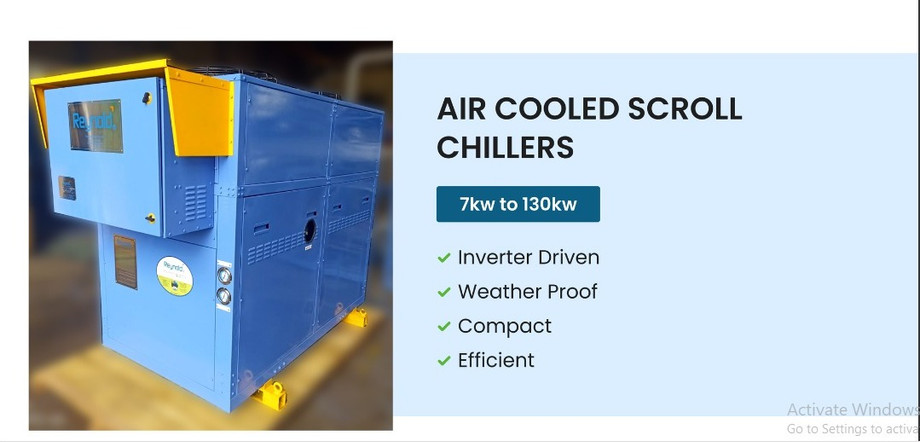
When an industrial process needs reliable cooling without the complexity of a cooling tower, an Air Cooled Inverter Scroll Chiller can be a practical choice. These chillers are designed to produce chilled water for processes where temperature control, energy efficiency, and dependable operation are important. With inverter technology, the compressor can adjust its speed according to the actual cooling demand instead of operating continuously at full capacity.
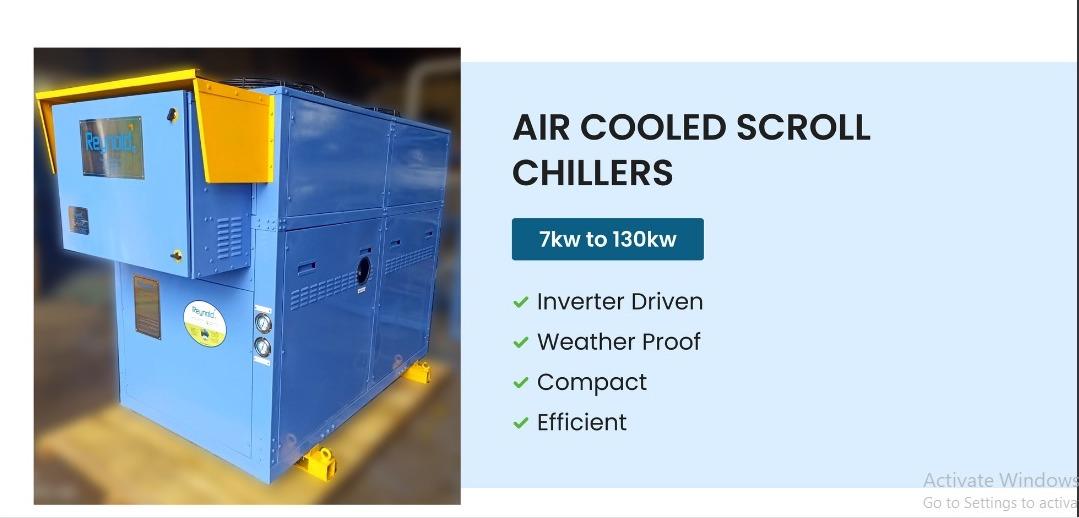
What Is an Air Cooled Inverter Scroll Chiller?
An Air Cooled Inverter Scroll Chiller is a refrigeration-based cooling system that uses scroll compressors with variable-speed inverter technology. Unlike water-cooled systems, it rejects heat directly into the surrounding air through an air-cooled condenser.
The inverter-controlled compressor changes its operating speed according to the cooling load. During periods of lower demand, the compressor can reduce its speed, while higher loads require increased capacity. This approach can help reduce unnecessary power consumption and provide more stable chilled-water temperatures.
These chillers are particularly useful for factories, process plants, commercial facilities, and applications where a consistent cooling supply is required throughout the day
How Does an Air Cooled Inverter Scroll Chiller Work?
The cooling process follows the basic refrigeration cycle. Refrigerant absorbs heat from the process water inside the evaporator. The refrigerant then moves to the scroll compressor, where it is compressed and its pressure and temperature increase.
The hot refrigerant travels to the air-cooled condenser, where condenser fans remove the heat and release it into the atmosphere. The refrigerant then passes through the expansion device, reducing its pressure and temperature before returning to the evaporator.
The inverter continuously helps match compressor output with the cooling requirement. This is especially useful when the process load changes during production.
Key Benefits
One of the biggest advantages is better part-load efficiency. Industrial cooling requirements are rarely constant, so variable-speed compressor operation can reduce energy wastage when the required load is lower.
Other important benefits include:
- Stable chilled-water temperature
- Reduced compressor cycling
- Efficient operation under varying loads
- No cooling tower required
- Easier installation compared with many water-cooled systems
- Lower water consumption
- Compact and practical system configuration
- Suitable for continuous industrial operation
The actual efficiency and operating cost depend on factors such as ambient temperature, chilled-water temperature, load profile, system design, and maintenance.
Industrial Applications
Air cooled inverter scroll chillers can be used across a wide range of industries. In plastics manufacturing, for example, an Industrial Cooling System for Plastics can provide controlled cooling for injection molding, extrusion, blow molding, and related processes. Consistent cooling is important because fluctuations in process temperature can affect production quality and cycle times.
Concrete production is another area where controlled cooling is important. A concrete chiller can be used to cool mixing water or other materials when concrete temperature needs to be controlled, particularly in hot-weather conditions.
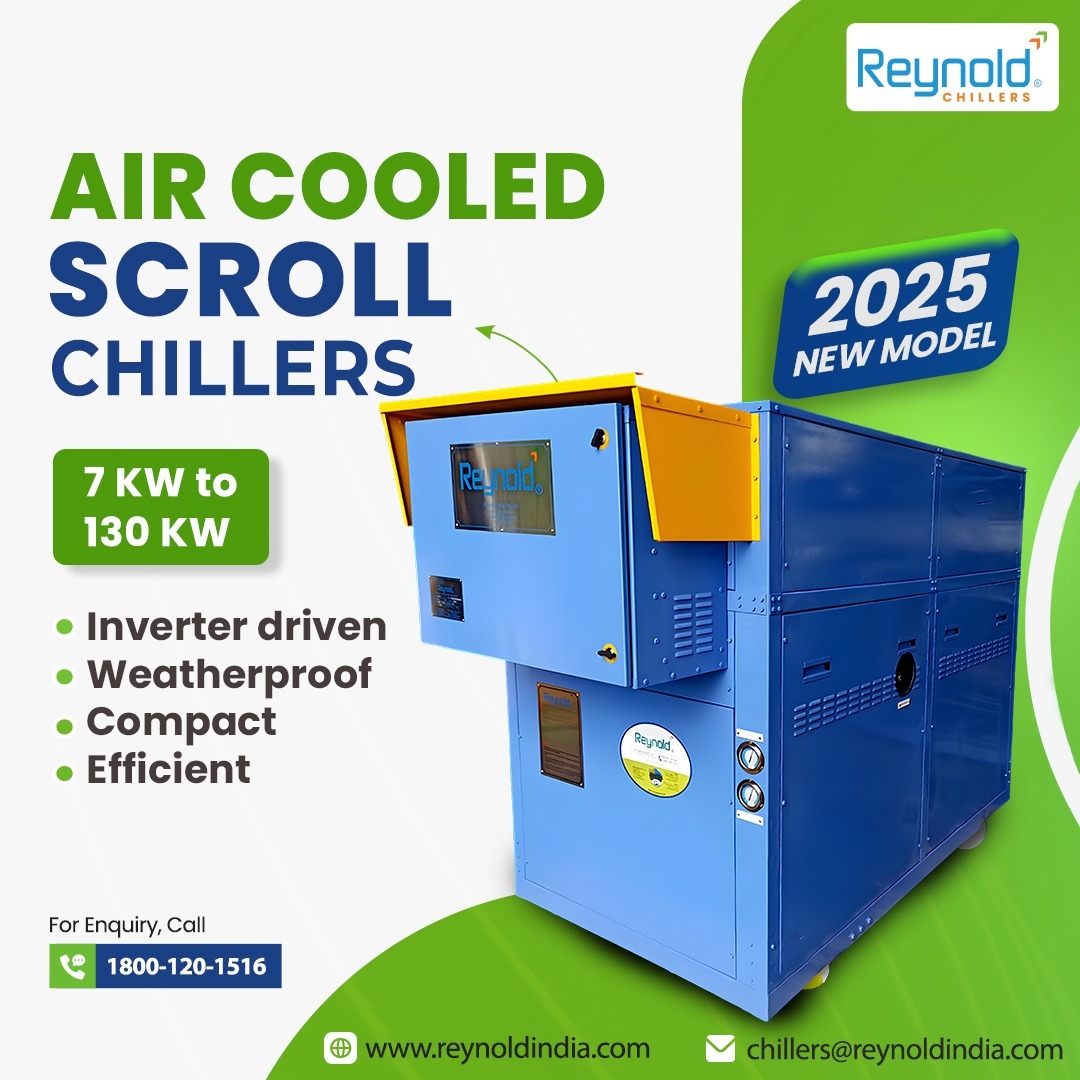
Different industrial processes require different cooling technologies. A Cryogenic Hydrogen Gas Chiller, for example, is designed for specialized hydrogen-related cooling requirements and operates under significantly different process conditions from a conventional factory chiller.
Similarly, an RF dryer may require cooling of specific components or process equipment depending on the system design. Water Cooled Screw chillers and an Air Cooled Screw chiller may also be selected for larger industrial loads where higher cooling capacities or different operating conditions are required.
In agricultural and irrigation-related applications, Drip Irrigation Chillers may be considered where controlled-temperature water or specialized process cooling is part of the overall system requirement.
Why Proper Chiller Selection Matters
Choosing a chiller should not be based only on tonnage. The required cooling capacity, inlet and outlet water temperature, flow rate, ambient temperature, operating hours, installation conditions, and process load should all be considered.
For industries with fluctuating cooling requirements, inverter technology can be particularly useful because the system can respond more closely to the actual demand.
1. What is an Air Cooled Inverter Scroll Chiller?
An Air Cooled Inverter Scroll Chiller is a cooling system that uses scroll compressors with variable-speed inverter technology to produce chilled water. The compressor adjusts its speed according to the cooling load, helping the system operate efficiently when demand changes.
2. How does an Air Cooled Inverter Scroll Chiller work?
The chiller removes heat from process water through the evaporator. The refrigerant absorbs this heat, is compressed by the scroll compressor, and then releases the heat through the air-cooled condenser. The cooled water is then circulated back to the industrial process.
3. What are the main benefits of Air Cooled Inverter Scroll Chillers?
The main benefits include variable-capacity operation, good part-load efficiency, stable water temperature, lower water consumption, easier installation, and no requirement for a cooling tower. Actual energy savings depend on the operating conditions and system design.
4. Where are Air Cooled Inverter Scroll Chillers used?
They are used in manufacturing plants, plastics processing, food and beverage production, machinery cooling, HVAC systems, process industries, and other applications requiring reliable chilled-water cooling.
5. Can an Air Cooled Inverter Scroll Chiller be used for plastics processing?
Yes. It can be used as an Industrial Cooling System for Plastics for applications such as injection molding, extrusion, and other plastic-processing operations where consistent process-water temperature is important.
6. What is the difference between an Air Cooled Screw Chiller and an Inverter Scroll Chiller?
Both systems use different compressor technologies. An Air Cooled Screw Chiller is commonly selected for larger cooling loads and continuous industrial applications, while inverter scroll chillers are particularly useful for applications with varying loads where variable-speed operation can improve part-load performance.
7. Is a cooling tower required for an Air Cooled Inverter Scroll Chiller?
No. An air-cooled chiller rejects heat directly to the surrounding atmosphere through its condenser and fans. This eliminates the need for a cooling tower and condenser-water circuit.
8. Can these chillers be used for specialized industrial applications?
Yes, but the chiller must be selected according to the actual process requirements. Specialized systems such as a Cryogenic Hydrogen Gas Chiller, concrete chiller, or cooling associated with an RF dryer may require different temperatures, materials, controls, and refrigeration configurations.
9. Are Water Cooled Screw Chillers better than Air Cooled Inverter Scroll Chillers?
Not necessarily. The right option depends on cooling capacity, operating conditions, ambient temperature, available utilities, installation space, and required efficiency. Water Cooled Screw Chillers can be suitable for large continuous loads, while air-cooled inverter scroll systems can be attractive where cooling-tower infrastructure and water consumption need to be minimized.
10. How do I choose the right industrial chiller?
The selection should consider cooling capacity, required supply and return temperatures, water or fluid flow rate, ambient conditions, operating hours, process load variation, installation environment, and energy requirements. Proper engineering is important for achieving reliable and efficient operation.
11. Can the same cooling technology be used for drip irrigation applications?
Cooling requirements vary by application. Drip Irrigation Chillers should be designed or selected according to the required water temperature, flow rate, environmental conditions, and actual agricultural or process requirement rather than using a standard chiller without evaluation.
12. Why should I choose a customized industrial cooling solution?
Every industrial process has different cooling requirements. A properly engineered solution can be matched to the required capacity, temperature, flow rate, operating conditions, and available space, helping provide more reliable and consistent process cooling.
Conclusion
An Air Cooled Inverter Scroll Chiller offers a combination of reliable cooling, variable-capacity operation, and practical installation. It can be a suitable solution for industries that need accurate temperature control without depending on a cooling tower.
From plastics processing and manufacturing to specialized process applications, selecting the right chiller configuration can improve process stability and overall cooling performance. A properly engineered system should always be selected according to the actual process conditions and required cooling load.